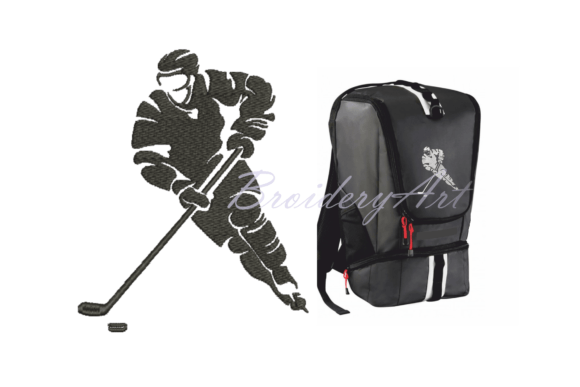
Hockey Player Embroidery: A Designer’s Review
When I first pulled up the Hockey Player design on my screen, I wasn’t looking for flashiness. As a designer who spends half my life troubleshooting thread breaks and the other half convincing clients that less is often more, I look for structural integrity and visual clarity. This particular machine embroidery design caught my eye not because it was overly complex, but because it promised versatility in a niche that is often underserved: sports-themed decor that doesn’t look like cheap merchandise.
The initial impression is one of dynamic motion. The silhouette captures the essence of the sport without getting bogged down in unnecessary micro-details that often cause stitching issues. For those of us running a craft business or managing an Etsy shop, this balance is critical. We need designs that read well from across the room but hold up under close inspection when a customer receives their personalized gift.
Real-World Application: The Custom Sweatshirt Test
To truly evaluate any digital embroidery file, you have to move beyond the preview image and think about the finished product. I recently had a client request a set of custom apparel for a local youth league. They wanted something professional yet fun, avoiding the stiff, corporate look of standard uniform logos. This is where Hockey Player shines.
I chose to test the design on a mid-weight cotton blend sweatshirt. Sports apparel presents unique challenges; the fabric is often textured, and the garment needs to withstand frequent washing and rough play. The layout of this design allowed me to place it prominently on the left chest without overwhelming the garment. The visual personality of the piece felt energetic, aligning perfectly with the mood of the sport. It didn’t feel like a generic clipart paste-job; it felt like a deliberate design asset.
For small shop owners, this kind of versatility is gold. You aren’t just selling an embroidered patch; you are selling a feeling of team pride and individual identity. Whether it is for a birthday gift, a holiday embroidery project for a sports-loving nephew, or boutique branding for a local rink, the design adapts well to the narrative you are trying to tell.
Stitching Performance and Technical Considerations
Let’s talk about the mechanics. While the product description notes that this machine embroidery design comes with multiple embroidery file formats, it is crucial to remember that format compatibility does not equal automatic quality. You must check the specific stitch density and sequence for your machine.
In my review, I focused on how the design handles different stitch types. A good sports design usually relies on a mix of satin stitch for outlines and fill stitch for larger areas. If the Hockey Player design uses dense fill stitches in small areas, you risk creating a hard, cardboard-like texture that can irritate the skin, especially on baby embroidery items or soft tote bags. I recommend inspecting the stitch count in your software before hitting start. If the density looks high, consider adding a tear-away stabilizer to support the fabric, particularly if you are working with stretchy materials like jersey knits.
Thread color choice plays a massive role here. On dark fabrics, such as navy or black hoodies, you need high-contrast thread colors to ensure the shape remains visible. I tested this using white and bright yellow threads against a dark background, and the definition held up beautifully. However, if you are using subtle tones on a textured fabric, the details might get lost. Always run a test on scrap fabric first. This is non-negotiable for professional results.
Navigating Fabric and Hoop Constraints
One area where many designers stumble is ignoring the physical limitations of the hoop size and fabric texture. This design is likely suitable for various hoop sizes, but you must confirm this in your specific file package. If you attempt to shrink the design too much for a small cap or a tiny baby onesie, the intricate parts of the player’s gear—like the stick or skates—may merge together. This loss of clarity kills the professional look of your handmade product.
Curved surfaces, like baseball caps, require extra caution. The distortion caused by the curve can warp the image. If you are using this for a hat, ensure you are using a strong cut-away stabilizer and possibly digitizing adjustments if you have the skills, or simply choosing a larger placement area where the fabric is flatter. For flat items like aprons, pillow covers, or kitchen towels, the design performs reliably, provided you account for the weave of the fabric. A loose-weave tea towel will behave differently than a tight canvas tote bag design.
Commercial Viability and Brand Consistency
For digital product sellers and commercial embroidery professionals, the licensing terms are paramount. The description states the design can be used with multiple embroidery machines, but it does not explicitly detail the commercial license scope. Before listing finished items on Etsy or using this in client work, verify whether the license allows for mass production or if it is limited to small batch handmade goods. Protecting your business means knowing your rights and restrictions.
From a branding perspective, consistency is key. If your shop specializes in rustic, vintage styles, this modern sports motif might clash unless styled carefully. However, for shops focusing on active lifestyles, kids’ apparel, or personalized gifts for sports fans, this design fits seamlessly into the catalog. It enhances buyer engagement because it speaks directly to a passionate community. People love to display their hobbies, and a well-executed embroidery project validates that passion.
Final Verdict for Makers and Designers
The Hockey Player embroidery design is a solid addition to your library of design assets. It offers a clean, recognizable aesthetic that works well for both personal use and small business merchandise. Its strength lies in its simplicity and adaptability across various garments, from sweatshirt embroidery to decorative patches.
Remember to treat every digital embroidery file as a starting point, not a final guarantee. Check your stitch density, choose your stabilizer wisely, and always test on similar fabric textures before committing to a final product. By doing so, you ensure that every finished product you hand over reflects the professionalism and care that your customers expect. Whether you are creating a holiday gift or stocking your online store, this design has the potential to deliver high-quality results when handled with expert attention to detail.