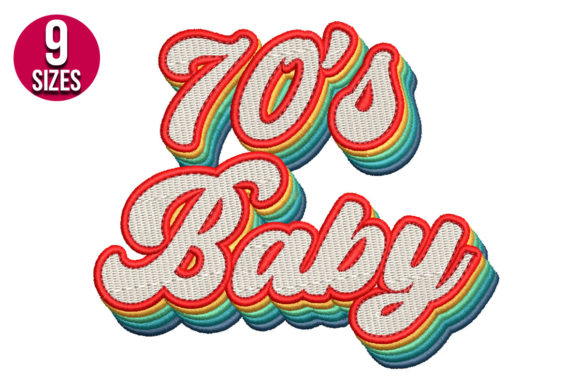
Stitching Nostalgia: A Designer’s Review of 70 s Baby
As a designer who has spent countless hours staring at digitizing software and troubleshooting thread breaks, I approach every new machine embroidery design with a mix of curiosity and skepticism. We have all seen the trends come and go, but there is something enduring about retro aesthetics. Recently, I had the chance to evaluate 70 s Baby, a design that promises to tap into that specific wave of nostalgia. My goal was not just to look at the preview image, but to understand how this embroidery file would behave in a real-world production environment for my craft business.
First Impressions and Visual Personality
The first thing that strikes you about 70 s Baby is its mood. It does not try to be overly complex or hyper-realistic. Instead, it leans into a playful, relaxed vibe that feels authentic to the era it references. The layout appears balanced, avoiding the clutter that often plagues novelty designs. For those of us who create handmade products, visual clarity is everything. A design that looks busy on screen can turn into a tangled mess of thread on fabric. Fortunately, this piece seems to prioritize clean lines and readable shapes.
The theme naturally lends itself to a wide audience. While it is categorized under Grandparents, which makes sense for gift-giving contexts, its appeal is broader. It works equally well for adults who identify with the decade, parents buying for their children, or anyone looking for a fun, ironic statement piece. The visual personality is friendly and approachable, which is crucial when you are trying to build customer trust through your Etsy seller profile or local craft fair booth.
Real-World Application: The Sweatshirt Test
To truly judge a design, you have to imagine it stitched out. I envisioned using 70 s Baby for a custom apparel order. Specifically, I pictured it on a mid-weight cotton blend sweatshirt. This is a popular item for small shop owners because it offers a large, flat canvas for embroidery. The design’s scale seemed appropriate for the left chest area or centered on the back. When I considered how the stitches would lay down, I looked for potential issues with density.
In sweatshirt embroidery, you want enough coverage to look professional, but not so much stitch density that the garment puckers or becomes stiff. From what I could assess, this design likely uses a combination of fill stitch for larger areas and satin stitch for borders or text elements. This combination is standard for durability and aesthetic appeal. If you are planning to use this for a personalized gift, such as a birthday hoodie, the result should feel premium rather than cheap. Customers can tell the difference between a well-digitized file and one that was auto-generated without care.
Versatility Across Product Lines
Beyond apparel, I considered how this design would translate to home decor and accessories. A tote bag design requires different considerations than a shirt. Tote bags are often made of canvas or heavy cotton, which can handle denser stitching. 70 s Baby would look charming on a natural-colored tote, perhaps paired with earthy thread colors like mustard yellow, burnt orange, or olive green to enhance the retro feel. It could also work beautifully as an embroidered patch if you plan to cut it out and apply it later, giving you more flexibility in placement.
For those interested in baby embroidery, caution is key. While the name suggests it, you must ensure the design is scaled down appropriately for infant clothing. Small details can get lost or become scratchy if not digitized correctly for tiny hoops. However, for older children’s items or nursery decor like pillow covers, it adds a whimsical touch without being overly childish. It fits seamlessly into a line of holiday embroidery gifts or everyday boutique products.
Technical Considerations and Fabric Choices
No design works perfectly on every surface. When evaluating 70 s Baby, I thought about where it might struggle. Textured fabrics, such as thick terry cloth towels or fuzzy fleece, can obscure fine details. If the design relies on thin running stitch outlines, they might disappear into the pile of the fabric. In such cases, increasing the stitch weight or choosing a smoother fabric like twill or polished cotton would yield better results.
Dark fabrics present another challenge. If you are stitching on black or navy, you need high-contrast thread colors to ensure the design pops. I always recommend testing your digital embroidery file on scrap fabric first. Check how the threads interact with the material. Does it pull? Does it register correctly? These are questions only physical testing can answer. Also, consider the hoop size. Ensure the design fits comfortably within your machine’s maximum area, leaving room for proper hooping tension.
Stretchy fabrics require extra attention. Using the right stabilizer is non-negotiable here. A cut-away stabilizer is usually best for garments that will be washed frequently, ensuring the design maintains its shape over time. Without proper stabilization, even the best design can distort, leading to unhappy customers and returns.
Commercial Viability and Brand Consistency
For commercial embroidery professionals and small shop product creators, consistency is vital. 70 s Baby offers a cohesive look that can help define your brand’s aesthetic. If your shop focuses on retro or vintage-inspired goods, this design asset fits right in. It enhances the perceived value of the finished product because it looks intentional and well-crafted.
When creating printable mockup images for your online store, this design photographs well. Its clear shapes and bold themes stand out in thumbnail images, which can improve buyer engagement. However, always verify the licensing terms before selling finished items. While the description mentions it comes with multiple file formats, it is essential to confirm whether the license allows for commercial use of the stitched products. Never assume; always read the documentation provided with the download.
Final Thoughts for the Maker
In the end, 70 s Baby is a solid addition to any designer’s library. It is versatile, emotionally resonant, and technically sound for most standard applications. Whether you are making a custom apparel piece for a client, a unique personalized gift for a friend, or stocking inventory for your craft business, this design holds up under scrutiny. Just remember to test your tension, choose your threads wisely, and respect the limitations of your fabric. Happy stitching.